Seasonal
Seasonal Pet Garden Prep Guide
January 6, 2026
•
9 min read
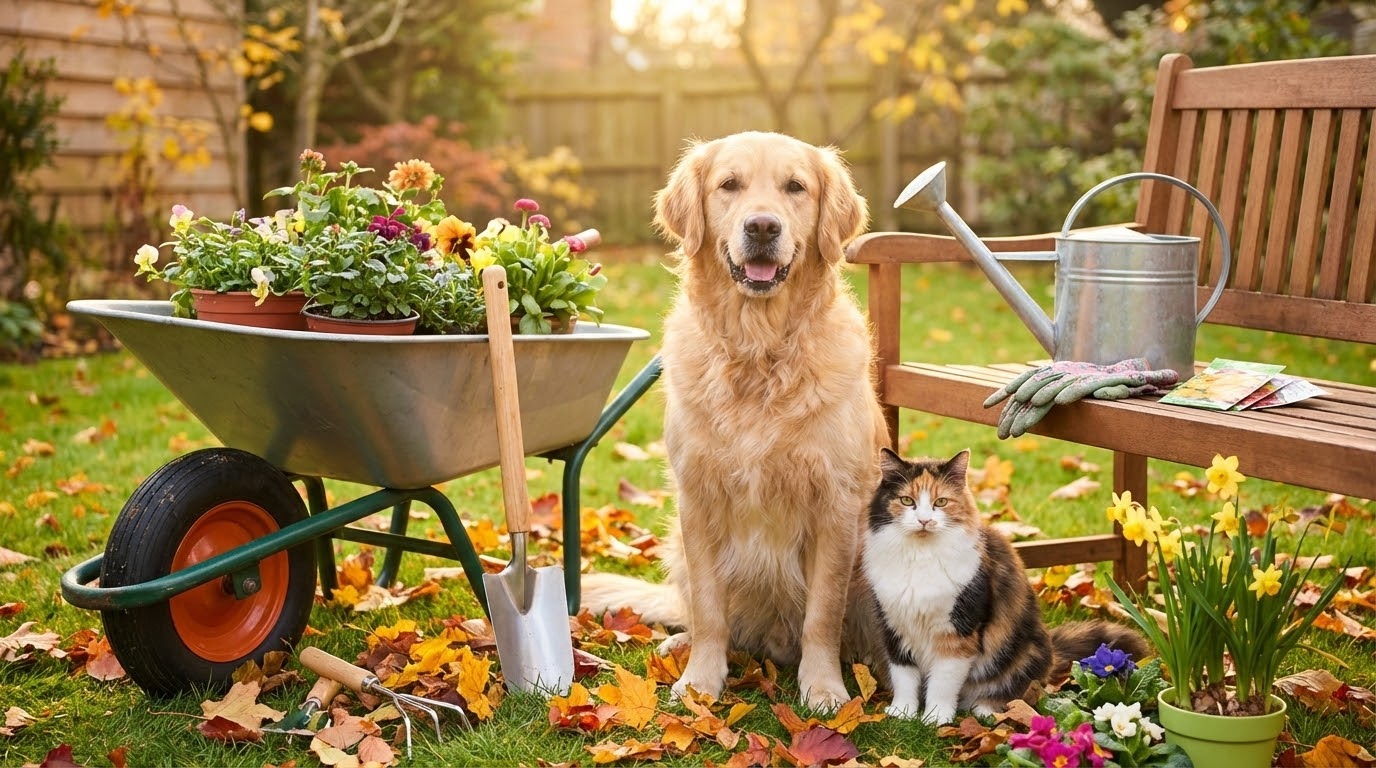
Each season brings new joys and new hazards for pet-owning gardeners. This comprehensive guide walks you through what to do (and watch out for) throughout the year to keep both your garden and your pets thriving.
🌸 Spring: New Growth, New Hazards
Garden Tasks
- Clean up winter debris and refresh mulch
- Start seeds indoors for transplanting
- Prune dormant plants before new growth
- Divide and relocate perennials
Pet Safety Focus
- Bulb toxicity: Tulips, daffodils, and hyacinths are toxic to pets. Use barriers or plant in elevated areas.
- Fertilizer hazards: Many spring fertilizers are attractive to dogs but dangerous. Use pet-safe alternatives.
- Slug bait danger: Metaldehyde-based baits are extremely toxic. Use pet-safe iron phosphate versions.
- Cocoa mulch: Smells like chocolate and is just as dangerous for dogs. Use cedar or pine instead.
☀️ Summer: Peak Growing Season
Garden Tasks
- Water consistently, especially containers
- Harvest herbs and vegetables regularly
- Deadhead flowers to encourage blooming
- Monitor for pests and diseases
Pet Safety Focus
- Heat protection: Ensure shaded areas for pets in outdoor spaces.
- Standing water: Empty saucers to prevent mosquitoes and discourage pet drinking.
- Pesticide awareness: Never spray when pets are present. Use only pet-safe products.
- Compost caution: Decomposing organic matter can contain toxins. Keep pets away from bins.

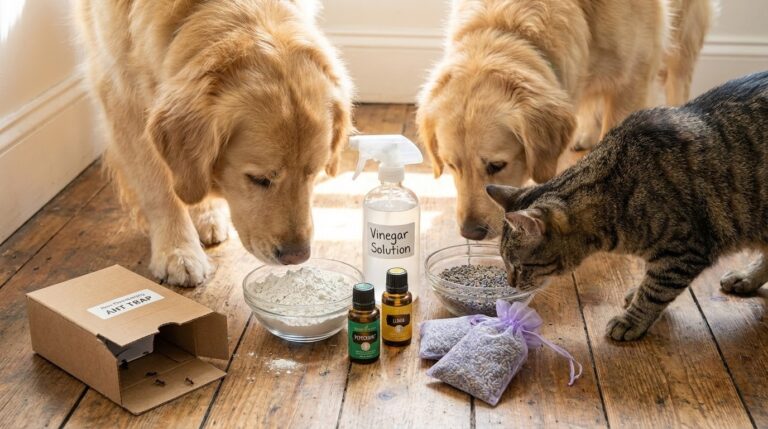
Pet-Safe Pest Control Kit
Natural solutions for summer pest problems that won’t harm your pets.
Shop Now →🍂 Fall: Preparation Time
Garden Tasks
- Plant spring-blooming bulbs
- Clean and store garden tools
- Bring tender plants indoors
- Add compost to garden beds
Pet Safety Focus
- Mushroom season: Wild mushrooms can be deadly. Remove any that appear in your space.
- Antifreeze danger: Sweet-tasting but deadly. Clean any spills immediately.
- Fallen fruit: Fermenting apples and other fruit can cause alcohol poisoning.
- Plant storage: Keep stored bulbs and seeds away from curious pets.
❄️ Winter: Rest and Plan
Garden Tasks
- Plan next year’s garden
- Order seeds and supplies
- Maintain indoor plants and herbs
- Start winter sowing for hardy plants
Pet Safety Focus
- Ice melt products: Many contain chemicals harmful to pet paws. Use pet-safe alternatives.
- Holiday plants: Poinsettias, mistletoe, and holly are toxic. Use artificial or keep well out of reach.
- Indoor plant moves: Plants brought inside may drop leaves pets might eat. Monitor closely.
- Space heaters: Keep away from plants AND pets to prevent burns.
“A pet-safe garden isn’t built in a day—it’s maintained through every season with awareness and care.”
Year-Round Pet Safety Checklist
- Keep a list of toxic plants and check before purchasing
- Store all gardening chemicals in locked cabinets
- Supervise pets in unfamiliar outdoor areas
- Know your vet’s number and nearest emergency clinic
- Keep ASPCA Poison Control number handy: (888) 426-4435
For a complete list of pet-safe and toxic plants, visit our Pet Safety Guide. With awareness and planning, every season can be safe and enjoyable for the whole family—furry members included.
This article may contain affiliate links. Read our affiliate disclosure for more information.